
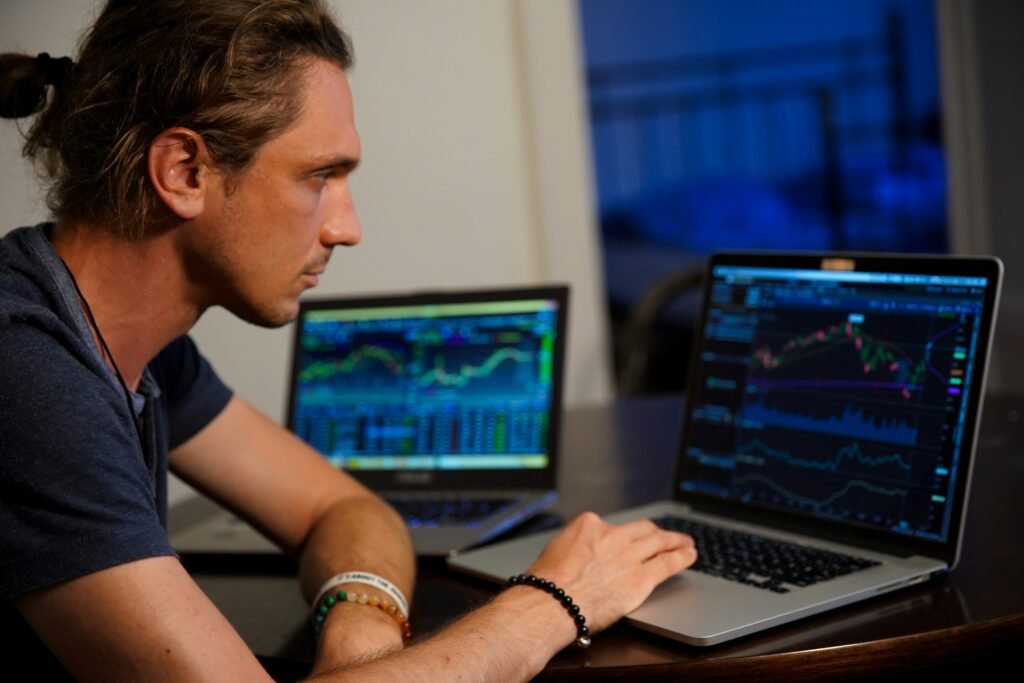
Copy trading across proprietary trading firm accounts presents a complex landscape for retail traders seeking to replicate the success of others. While the allure of passive income and accelerated learning is strong, numerous compliance challenges and practical difficulties emerge when attempting to scale copy trading strategies across multiple prop firm accounts. This article delves into these issues, drawing on community discussions and observed trends to provide a nuanced understanding of the risks and realities involved.
The rise of proprietary trading firms has opened up new avenues for individuals to access capital for trading. Simultaneously, copy trading technology has evolved, allowing traders to automate the replication of trades executed by experienced individuals. The combination of these two has naturally led to the exploration of copy trading within the prop firm ecosystem.
Why Traders Turn to Copy Trading
Several factors contribute to the appeal of copy trading for prop firm participants:
- Leveraging Expertise: Many traders who successfully pass prop firm challenges may not possess the desire or time to manage multiple accounts. Copy trading offers a solution to monetize their strategies.
- Learning by Doing (Indirectly): For newer traders, observing and automatically executing trades from successful individuals can be a valuable learning experience, albeit a passive one.
- Diversification and Risk Management: By subscribing to multiple signal providers, traders can potentially diversify their risk across different strategies and trading styles.
- Scalability: The primary driver for many is the ability to scale their capital allocation by subscribing to multiple, funded prop firm accounts simultaneously.
The Prop Firm Model and its Implications for Copy Trading
Proprietary trading firms, by their nature, operate under specific rules and regulations designed to manage risk for both the firm and the trader. These rules are paramount when considering any form of automated trading, including copy trading.
- Challenge and Evaluation Phases: Most prop firms have a two-phase evaluation process. Passing these phases often involves demonstrating consistent profitability and adhering to risk parameters like maximum daily and overall losses.
- Trading Platform Restrictions: Firms often mandate the use of specific trading platforms or have limitations on the types of Expert Advisors (EAs) or automated trading tools that can be used.
- Profit Share and Payouts: The profit-sharing models and payout schedules vary significantly between firms, influencing the financial mechanics of copy trading.
For those interested in the intricacies of copy trading and the compliance challenges faced by prop trading accounts, a related article that delves deeper into this topic can be found at Funded Checker News. This resource offers valuable insights and community lessons that can help traders navigate the complexities of compliance while engaging in copy trading strategies.
Navigating Compliance: The Minefield of Prop Firm Rules
The most significant hurdle for copy trading across prop firm accounts lies in adhering to the diverse and often strict compliance rules set by individual firms. What might be permissible for one firm could be a direct violation for another, leading to account suspension or forfeiture of capital.
Prohibited Trading Practices: The “No-No” List
Prop firms are keenly aware of potential abuses, and certain trading practices are universally discouraged or outright banned. Copy trading, especially when scaled, can inadvertently trigger these flags.
- Grid Trading: This strategy involves placing buy and sell orders at predetermined intervals above and below a set price. While sometimes used legitimately, it can be easily abused for arbitrage or to artificially inflate trading volume, which is often scrutinized.
- Martingale Strategy: This is a betting strategy where a player doubles their bet after every loss. In trading, it translates to increasing position size after losses. Most prop firms prohibit this due to its high-risk nature, which can lead to rapid depletion of capital.
- Latency Arbitrage and High-Frequency Trading (HFT): Firms are generally wary of strategies that exploit minuscule price discrepancies or execute trades at extremely high frequencies. These can be seen as unfair advantages.
- Simultaneous Hedging: Some firms prohibit the practice of holding both a long and short position in the same asset simultaneously within the same account, as it can be used to bypass risk limits.
The Challenge of Identifying Similar Trade Patterns
Proprietary trading firms employ sophisticated algorithms and manual review processes to detect non-compliant trading activities. When copy trading is employed, particularly with multiple signal providers or across different accounts, there’s a significant risk of generating trade patterns that appear too similar across various accounts.
- Identical Entry and Exit Points: Even with slight variations in execution times, identical entry and exit prices for a large number of trades can raise a red flag.
- Consistent Trade Sizes: If trades are consistently sized in a way that suggests automated replication rather than organic trading decisions, it can be a concern.
- Correlation of Trades: When trades across different accounts executed by the same individual consistently move in tandem, particularly for the same assets at the same times, it strongly indicates automated replication.
The “Prohibited Tools” Clause
Many prop firms have explicit clauses in their terms of service that prohibit the use of unauthorized trading software or tools. Copy trading platforms, depending on their technical implementation and how they interact with the trading platform, can fall into this category.
- API Access and Unsanctioned Bots: Firms often restrict direct API access for external automated trading tools. Copy trading services that rely on such access without explicit permission are a common risk.
- Automated Order Execution: The act of automatically placing orders based on another trader’s actions can be viewed as using an unauthorized automated trading system, even if the intent isn’t malicious.
Practical Challenges in Real-World Copy Trading Scenarios

Beyond direct compliance violations, the practicalities of copy trading across prop firm accounts present a myriad of challenges that can undermine profitability and lead to frustration.
Slippage: The Silent Killer of Profitability
Slippage occurs when the execution price of a trade differs from the expected price. This is a natural phenomenon in live markets, but it can be significantly amplified when copy trading, especially across multiple accounts with potentially different broker feeds or execution speeds.
- Execution Latency: The delay between the signal provider executing a trade and the copy trading software replicating it across multiple accounts can lead to the copied trade being executed at a worse price.
- Order Book Dynamics: The liquidity in the market can change rapidly. If a copy trade is executed slightly after the original, it might face a less favorable order book, resulting in adverse slippage.
- Impact on Small Accounts: For prop firm accounts with smaller capital bases, even minor slippage can have a disproportionately large impact on profitability and the ability to stay within drawdown limits.
Asynchronous Execution and Diversified Trading Strategies
Even when using a single copy trading platform, achieving perfect synchronization across multiple prop firm accounts is difficult. When combining different providers or platforms, the problem intensifies.
- Divergent Signal Speeds: Different signal providers will have varying speeds of disseminating their trade signals. This leads to asynchronous execution across the copied accounts.
- Platform Differences: Even if the signal is received simultaneously, the trading platforms themselves can have different execution speeds and server responses, further compounding the asynchronous nature of trades.
- Impact on Strategy Integrity: For strategies that rely on precise entry and exit timing (e.g., scalping or high-frequency strategies), asynchronous execution can render the strategy ineffective or even detrimental.
Risk Management Misalignment
Effective risk management is crucial for passing prop firm challenges and for sustainable trading. Copy trading can complicate this by creating misalignments in how risk is perceived and managed across different accounts.
- Divergent Drawdown Limits: Each prop firm has its own daily and overall drawdown limits. If a signal provider executes a losing trade that impacts multiple copied accounts, the cumulative drawdown across these accounts could inadvertently breach the limits of one or more.
- Position Sizing Inconsistencies: Ensuring that position sizes are appropriately scaled across all copied accounts to adhere to prop firm risk parameters is a complex task. An error in calculation or an unforeseen market move can lead to excessive risk on certain accounts.
- Lack of Granular Control: While some copy trading tools offer customization, they often lack the granular control needed to fine-tune risk parameters on a per-prop-firm-account basis, making it difficult to comply with each firm’s unique requirements.
Reported Complaints and Risk Signals in the Community

Discussions within prop trading communities often highlight the pitfalls of copy trading. While these are anecdotal and not official pronouncements, they serve as valuable risk signals for traders considering this approach.
Account Violations and Terminations
A recurring theme in trader forums and social media groups is the experience of accounts being flagged or terminated due to perceived violations related to copy trading.
- “Unusual Trading Activity” Flags: Traders often report receiving warnings or notifications about “unusual trading activity” that can be linked to automated or replicated trading patterns.
- Suspicious Correlation Across Accounts: The most frequently cited reason for account termination is the detection of highly correlated trading activities across multiple accounts held by the same individual, even if they are with different prop firms.
- Loss of Payouts and Capital: In many reported cases, traders have lost their funded accounts, forfeiting profits and the initial challenge fees, due to these violations.
The “Echo Chamber” Effect and Strategy Degradation
When many traders attempt to copy the same successful strategy, especially if it’s a less common or sensitive one, it can lead to market impact and strategy degradation.
- Increased Market Volatility: If a large number of traders execute the same trade simultaneously, it can create temporary spikes or drops in asset prices, affecting the original signal provider and other market participants.
- Reduced Effectiveness of Strategies: Strategies that rely on exploiting specific market inefficiencies can become less effective or even obsolete as more traders adopt them through copy trading. This is often referred to as “strategy degradation” or “alpha decay.”
The Challenge of Due Diligence on Signal Providers
Identifying truly skilled and compliant signal providers is itself a significant challenge.
- “Prop-Farmed” Signals: Some signal providers might be running their own prop firm challenges or funded accounts, and their reported performance might be inflated or not indicative of real-world trading under firm restrictions.
- Lack of Transparency: Many copy trading platforms and signal providers lack transparency regarding their trading methodologies, risk management practices, and whether they themselves are compliant with prop firm rules.
- Focus on Short-Term Gains: Some signal providers may prioritize short-term profits over long-term consistency, which can be detrimental when trying to pass the stringent evaluation periods of prop firms.
In exploring the intricacies of copy trading across prop accounts, one can gain valuable insights from the article on the importance of compliance in trading environments. This resource highlights the lessons learned from real compliance problems faced by traders and firms alike. For those interested in understanding the broader implications of these issues, the article can be found here, providing a comprehensive overview that complements the discussion on community lessons in copy trading.
Unverified Claims and Potential for Misrepresentation
| Metric | Description | Value / Example | Compliance Impact |
|---|---|---|---|
| Number of Prop Accounts Involved | Total proprietary trading accounts participating in copy trading | 15 | Higher number increases monitoring complexity |
| Copy Trading Volume | Aggregate volume of trades copied across accounts | 120,000 trades/month | Potential for market manipulation if unchecked |
| Compliance Breach Incidents | Number of reported compliance issues related to copy trading | 3 incidents in last quarter | Triggers review and policy updates |
| Average Time to Detect Breach | Time taken to identify compliance problems | 5 days | Faster detection reduces risk exposure |
| Percentage of Accounts with Identical Trades | Proportion of accounts executing the same trades simultaneously | 65% | May indicate copy trading or collusion |
| Regulatory Reporting Frequency | How often compliance reports are submitted to regulators | Monthly | Ensures transparency and accountability |
| Community Feedback Instances | Number of compliance-related issues raised by community members | 8 in past 6 months | Helps identify blind spots in compliance |
| Training Sessions Conducted | Number of compliance training sessions for traders | 4 sessions/year | Improves awareness and reduces violations |
It is crucial to distinguish between verified compliance issues and unverified claims that circulate within trading communities.
Allegations of “Trading Bot Detection”
While many prop firms have legitimate reasons to monitor for automated trading, some traders have reported being accused of using “trading bots” when they were in fact using legitimate copy trading software.
- Ambiguity in Terms of Service: The interpretation of what constitutes a “trading bot” can be subjective, leading to disputes.
- False Positives: Sophisticated detection algorithms are not always perfect and can sometimes flag legitimate trading activities as suspicious.
The “Scam” Narrative Without Proof
In the absence of concrete evidence, some traders resort to labeling prop firms or copy trading platforms as “scams” when they encounter issues.
- Misunderstanding of Rules: Often, these accusations stem from a lack of understanding or adherence to the prop firm’s clearly stated rules.
- Emotional Responses: When capital is lost due to a violation, emotional responses can lead to exaggerated claims that are not supported by factual evidence.
In exploring the intricacies of copy trading across prop accounts, it’s essential to consider the broader implications of compliance issues that have arisen in the community. A related article that delves into these challenges and offers valuable insights is available at this link. By examining real-world compliance problems, traders can better understand the potential pitfalls and learn from the experiences of others in the field.
Towards a More Compliant and Sustainable Approach
Given the inherent complexities, a more responsible and sustainable approach to copy trading within the prop firm space requires a shift in focus.
Prioritizing Direct Prop Firm Compliance
The absolute priority for any trader utilizing copy trading must be understanding and adhering to the specific rules of each prop firm.
- Thoroughly Read and Understand Terms of Service: Before engaging in copy trading or any automated strategy, meticulously review the terms and conditions of each prop firm.
- Seek Clarification on Ambiguous Rules: If any aspect of the rules regarding automated trading or signal replication is unclear, contact the prop firm’s support team directly for clarification.
- Avoid “Black Box” Solutions: Do not blindly subscribe to copy trading services without understanding their underlying mechanics and potential compliance implications.
Choosing Compliant Copy Trading Tools and Strategies
Not all copy trading solutions are created equal. Selecting tools and strategies that are less likely to trigger compliance flags is crucial.
- Manual Execution of Signals: For many, the safest approach is to manually execute trades based on signals received, rather than fully automating the process. This allows for greater control and discretion.
- Tools with Limited Intervention: If using automated tools, opt for those that offer a high degree of control over order placement, size, and timing, and ideally, are explicitly permitted by the prop firm.
- Focus on Strategies with Natural Variation: Strategies that naturally incorporate variations in entry/exit points and trade sizes, rather than perfectly synchronized executions, may be less likely to raise red flags.
Diversifying Signal Providers Strategically
If employing multiple signal providers, diversification should be approached with caution.
- Independent Performance Verification: Ensure signal providers have a verifiable track record and understand their risk management.
- Avoid Overlapping Strategies: Do not subscribe to multiple providers whose strategies are too similar, as this increases the risk of generating correlated trade patterns.
- Monitor Individual Account Performance: Regularly review the performance of each prop firm account to ensure that copy trading is not negatively impacting compliance or profitability.
The Importance of Education and Community Wisdom
Engaging with the trading community and staying informed is invaluable.
- Learn from Others’ Experiences: Read discussions and case studies from other traders who have navigated copy trading challenges.
- Understand Risk Signals: Be aware of common complaints and risk signals associated with copy trading in the prop firm space.
- Continuous Learning: The prop firm landscape and copy trading technologies are constantly evolving, requiring ongoing education and adaptation.
Conclusion: A Calculated Risk with Strict Oversight
Copy trading across proprietary trading firm accounts offers a compelling proposition for capital scaling and strategy replication. However, it is a path fraught with significant compliance challenges and practical difficulties. The overarching lesson from community experiences is that strict adherence to individual prop firm rules is non-negotiable. Without this foundational understanding and rigorous self-oversight, the pursuit of amplified trading success through copy trading can quickly lead to account termination, loss of capital, and significant frustration. Traders must approach this strategy with a clear understanding of the risks, a commitment to due diligence, and a meticulous focus on compliance.
Practical Checklist for Copy Trading Across Prop Accounts
- **Have you thoroughly read and understood the Terms of Service for each prop firm you are using?**
- Have you identified any explicit rules in your prop firm’s ToS regarding automated trading, Expert Advisors, or signal replication?
- Have you contacted your prop firm’s support to clarify any ambiguous rules related to copy trading?
- Do you understand how your chosen copy trading tool interacts with the prop firm’s trading platform?
- Are you aware of the specific drawdown limits (daily and overall) for each of your prop firm accounts?
- Do you have a clear plan for position sizing that accounts for prop firm risk rules across all copied trades?
- Are you regularly monitoring your trade history for patterns that might resemble prohibited activities (e.g., grid, martingale)?
- Are you prepared for potential slippage and how it might affect your trade execution prices on different accounts?
- Do you have a backup plan in case your copy trading setup is flagged or your accounts are terminated?
- Are you actively learning from the experiences of other traders in the prop trading community regarding copy trading?
Sources
- Proprietary Trading Firm Terms of Service (as reviewed from various publicly available documents)
- Community discussions on trading forums (e.g., Forex Factory, Reddit’s r/forex, and specific prop trading groups)
- Financial news articles on proprietary trading and algorithmic trading regulations (where applicable and cited)
- Analysis of common trading strategy definitions and their risk implications in regulated environments.